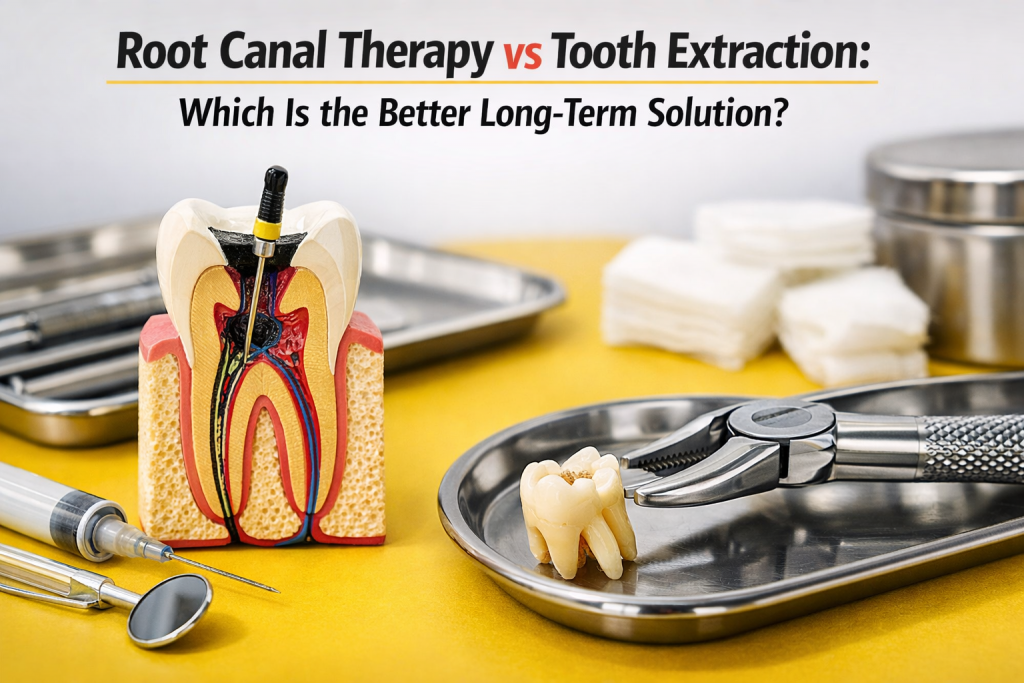
Many patients must decide whether to have root canal therapy done, or have a tooth extracted when saving a damaged tooth. Both procedures try to alleviate immediate pain, and avoid further dental problems, but which is truly the better long-term solution? As certified root canal specialists, D’Arcy Dental, and our skilled dental team want to help you to be able to answer this question with confidence.
Understanding Root Canal Therapy
When a tooth is infected or decaying, root canal therapy is initiated to repair the tooth. Every tooth contains a center known as the tooth pulp. The tooth pulp is the soft, inner connective tissue that contains nerves and blood vessels. If bacteria enters this zone, a patient might experience pain, and swelling, and may develop an infected cavity known as an abscess.
During root canal therapy, the infected pulp is removed, the canal is cleaned, and the tooth is sealed; this is done to prevent reinfection. Often, a protective and reinforcing crown will be placed on the tooth afterward.
Why choose root canal therapy?
- Preserves your natural tooth
- Maintains your bite and jaw alignment
- Reduces the risk of shifting teeth
- Prevents bone loss in the jaw
A root canal may sound intimidating, but advances in dental technology make the procedure virtually painless. Most patients experience quick recovery and return to normal function the same day.
When Tooth Extraction Becomes Necessary
While some teeth are beyond the point of repair, in these rare instances, the only real option is having that tooth extracted. Some of the reasons teeth may require extraction include:
- Severe decay beyond repair
- Cracks or fractures extending below the gum line
- Repeated infection despite previous treatments
- Advanced periodontal (gum) disease
While extraction may rid a patient of pain in the short term, it will very frequently create larger problems over time. A patient will have missing teeth, which can lead to teeth getting out of alignment (shifting teeth) and problems with the bite. Even the jawbone can be negatively impacted; it may actually begin to deteriorate.
Root Canal vs Extraction: The Long-Term Perspective
Pain relief shouldn’t be the only thing you think about when making a decision between a root canal therapy and extraction. Think about the long effects on your dental health. Here is a summary of the long-term effects of the options:
1. Preserving Natural Teeth
Root canals preserve your natural teeth. Missing teeth impact your bite and jaw structure. Once you extract a tooth, it’s gone for good and you are left with the need for expensive prosthetics.
2. Cost Considerations
Root canals paired with crowns can be pricey in comparison to extractions, however teeth replacements (bridges, dentures, or implants) are even more expensive than the initial root canal.
3. Functionality & Comfort
After a successful root canal, your natural tooth functions like before, without affecting speech or eating habits. Dentures or bridges may require adjustments, and some patients experience discomfort or difficulties adapting.
4. Oral Health Impact
Tooth extraction can accelerate bone loss in the jaw. Root canal therapy preserves the bone and prevents shifting teeth, supporting overall oral health.
Common Myths About Root Canal Therapy
A root canal has a lot of positive benefits, but people often shy away from it because of the myths surrounding it.
- Myth: Root canals are extremely painful.
Fact: Modern root canals are no more painful than a routine filling, thanks to advanced anesthesia. - Myth: Extracting the tooth is easier and better.
Fact: Removing a tooth may solve immediate pain but introduces future dental complications and additional costs. - Myth: Root canals fail often.
Fact: With proper care and treatment by a root canal specialist, success rates exceed 95%.
When Extraction Might Be the Right Choice
Although preserving a tooth is ideal, there are times when the best solutions for the long-term is actually tooth extraction. These include Based on my experience, some of the most common reasons include:
- Wide-ranging or extensive decay or a broken tooth.
- A tooth that cannot be fixed, even with a crown.
- Severe gum disease that is compromising multiple teeth.
These are the possible situations that may require an extraction. After the extraction, your dentist will talk to you about replacement options for the tooth. This may include dentures, bridges, or dental implants, which are often provided by a denture clinic.
Making the Decision
When making a decision on a root canal or tooth extraction, there are several considerations that need to be made:
- The condition of the tooth
- Your overall oral health
- Long-term cost and functionality
- Recommendations from a qualified root canal specialist
D’Arcy Dental is a clinic where the health of the patient’s teeth are the main priority. That is why we create a dental care plan that is the best for the health of the teeth.
Conclusion: Save Your Smile with Expert Care
Because preserving your teeth and root canal therapy is ideal, nothing should be done to your teeth unless there is cause for concern. This is also why extractions can be done to preserve the patient’s teeth.
The key is to consult a trusted root canal specialist who can evaluate your situation and provide a treatment plan tailored to your needs. At D’Arcy Dental, we’re committed to helping you make informed choices that protect your smile for years to come.